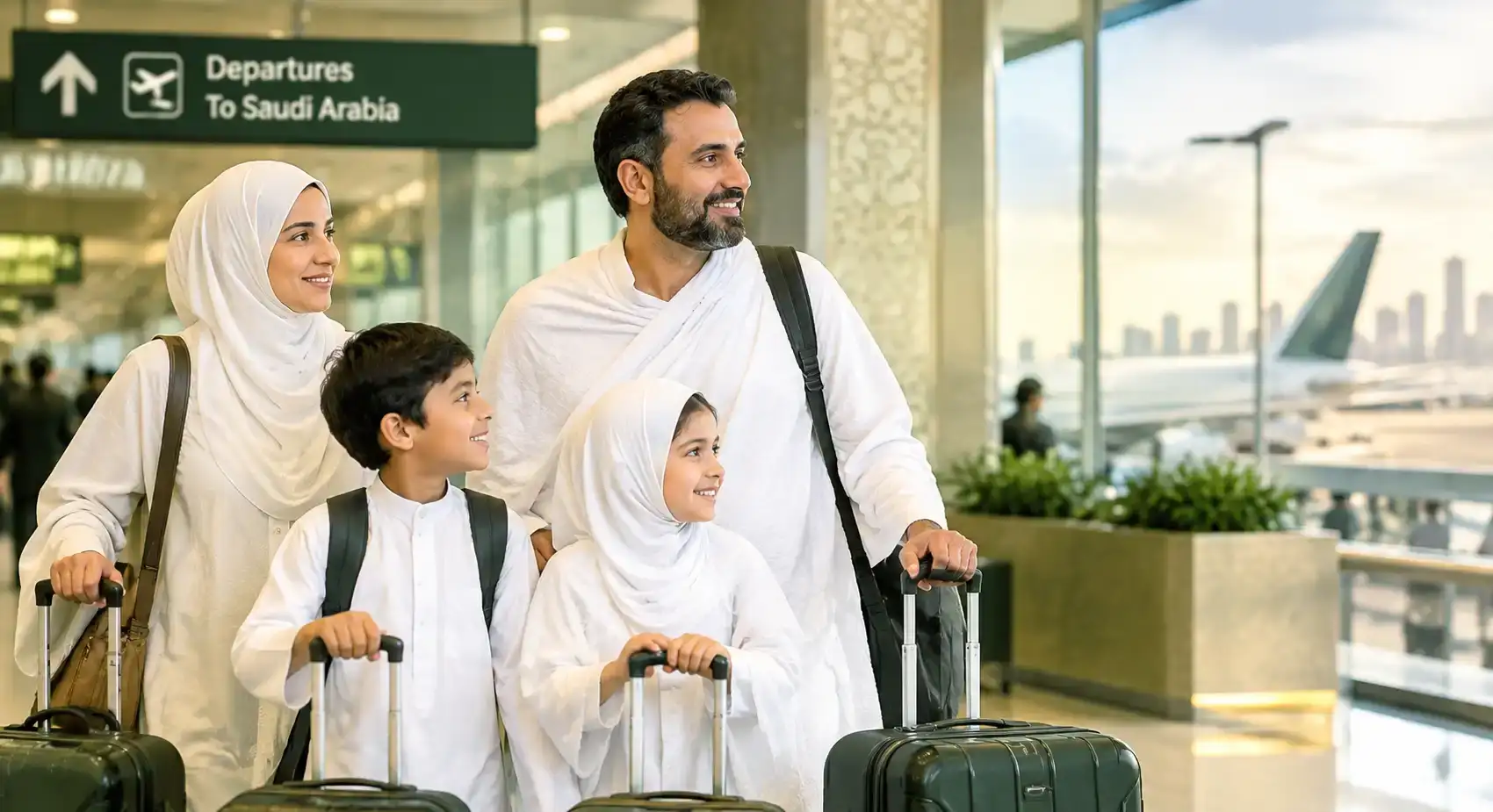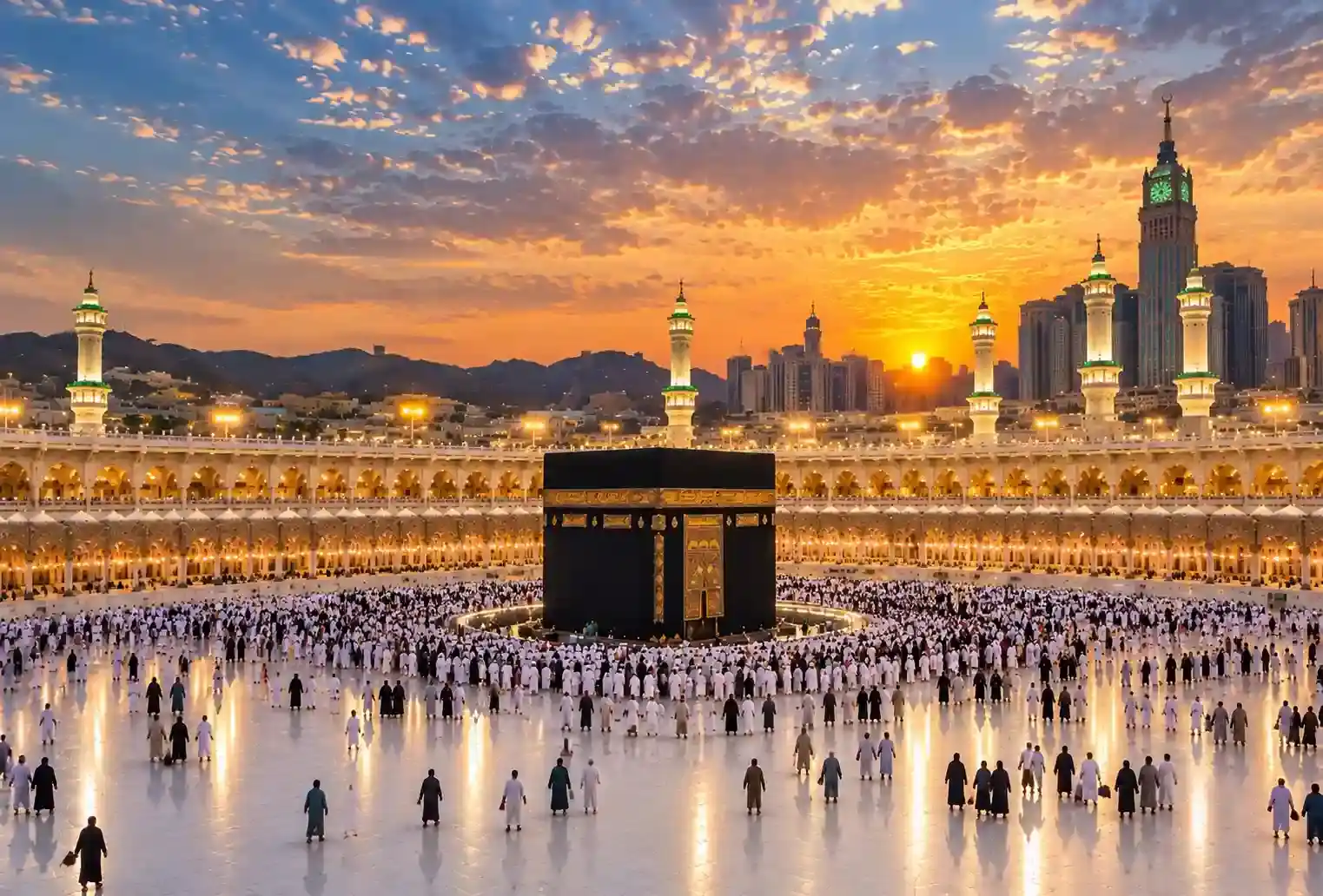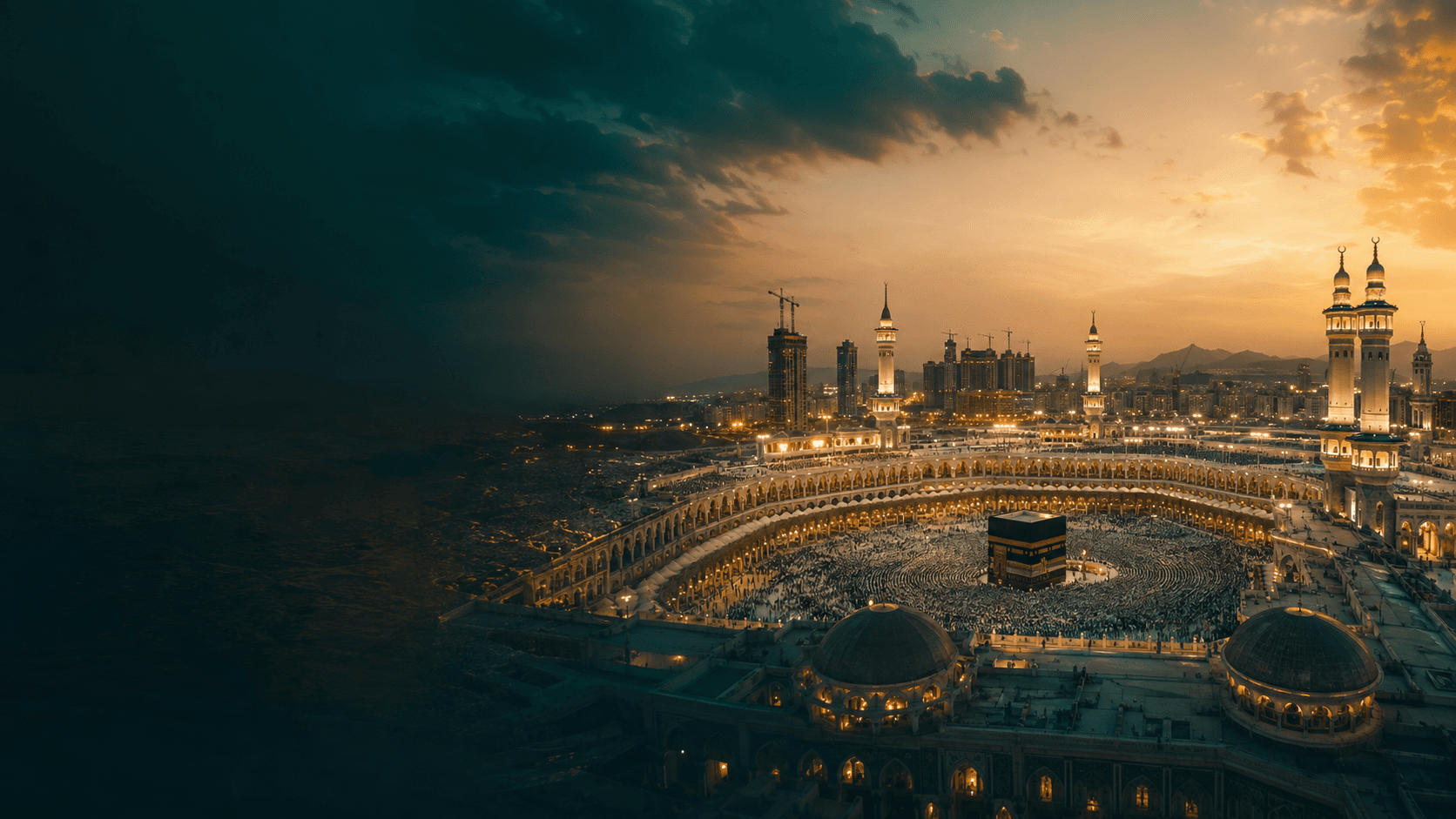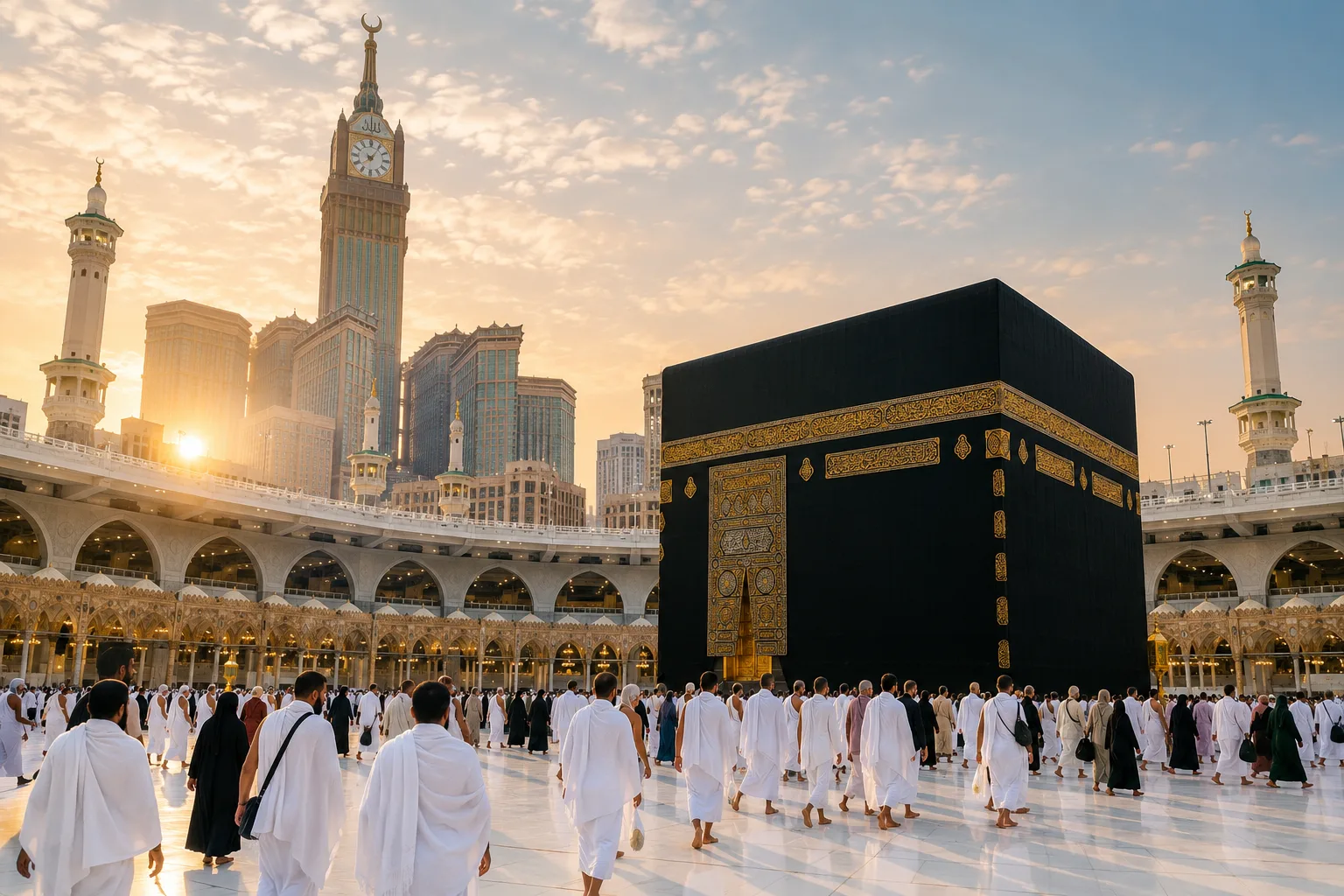
Hajj is one of the most important acts of worship in Islam. Every year, Muslims from around the world travel to Makkah in Saudi Arabia to perform this sacred pilgrimage. They come from different countries, speak different languages, and have different backgrounds. Yet they gather with the same purpose: to worship Allah.
For many Muslims, Hajj is a lifelong dream. Some save money for years to make the journey. Others wait for the opportunity to become physically and financially able to go. When the time finally comes, the experience can be deeply meaningful.
But what exactly is Hajj? Why is it important? Who must perform it, and what happens during the pilgrimage?
This guide explains the meaning of Hajj, its place in Islam, the main rites, important dates, and practical ways to prepare. Whether you are learning about Hajj for the first time or preparing for your own journey, this article will help you understand the basics.
What Is Hajj in Islam?
Hajj is the annual pilgrimage to Makkah that Muslims perform during specific days of the Islamic month of Dhul Hijjah. It is one of the Five Pillars of Islam and is an obligation for Muslims who meet the required conditions.
During Hajj, pilgrims perform a series of acts of worship at designated locations in and around Makkah. These include entering Ihram, standing at Arafat, spending time in Muzdalifah, and performing Tawaf around the Kaaba.
Hajj is more than a physical journey. It is an opportunity to seek Allah's forgiveness, renew one's faith, practise patience, and remember the purpose of life.
Allah says in the Quran:
"And [due] to Allah from the people is a pilgrimage to the House — for whoever is able to find thereto a way."
Reference: Quran, Surah Ali 'Imran 3:97.
This verse establishes the obligation of Hajj for those who are able to undertake it.
Why Is Hajj Important?
Hajj holds a special place in a Muslim's life because it combines worship, sacrifice, discipline, and unity.
1. Hajj is one of the Five Pillars of Islam
The Five Pillars are the main foundations of Islamic practice:
Shahadah: the declaration of faith.
Salah: the five daily prayers.
Zakah: obligatory charity for those who meet its conditions.
Sawm: fasting during Ramadan.
Hajj: pilgrimage to Makkah for those who are able.
Hajj is not simply a recommended trip. It is an obligation when its conditions are met.
2. Hajj teaches equality
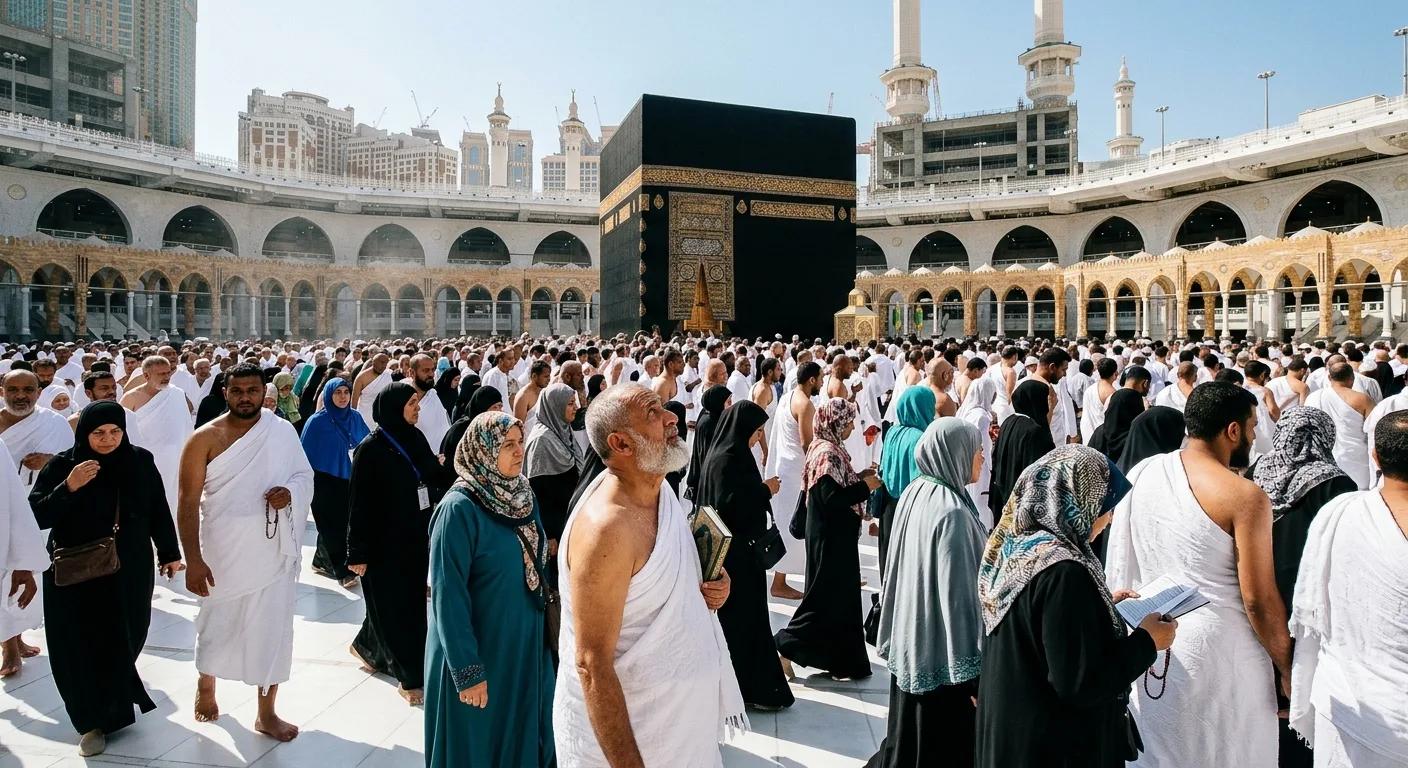
During Hajj, men wear simple Ihram garments, while women observe the applicable rules of Ihram and dress modestly according to Islamic guidance. Pilgrims stand together without the usual signs of wealth, status, or nationality defining their worship.
This reminds Muslims that their worth is not based on their appearance, possessions, or social position.
3. Hajj encourages repentance
Many pilgrims approach Hajj with a sincere desire to seek forgiveness and improve their lives. The journey encourages reflection on past actions and a stronger commitment to worship and good character.
The Prophet Muhammad ﷺ said that whoever performs Hajj without sexual relations or sinful conduct returns as free from sin as on the day their mother gave birth to them.
Reference: Sahih al-Bukhari 1521.
This hadith highlights the importance of sincere worship and avoiding sinful behaviour during Hajj.
4. Hajj connects Muslims with Islamic history
Many rites of Hajj remind Muslims of Prophet Ibrahim (Abraham), his family, and their devotion to Allah. The pilgrimage also brings Muslims to the Kaaba, the sacred House of Allah in Makkah.
These acts help pilgrims reflect on faith, obedience, trust in Allah, and the history of Islamic worship.
Who Must Perform Hajj?
Hajj is obligatory once in a lifetime for a Muslim who fulfils its conditions. The exact application of some conditions can depend on a person's circumstances and the school of Islamic law they follow.
In general, the conditions include:
Being Muslim: Hajj is an act of Islamic worship.
Being an adult: Hajj is obligatory upon reaching religious maturity.
Being of sound mind: The person must be able to understand and undertake the obligation.
Having the ability to travel: This includes sufficient physical and financial ability, along with a safe and feasible journey.
Meeting relevant travel requirements: Current regulations and individual circumstances can affect whether a person can undertake Hajj.
A child may perform Hajj, but that pilgrimage does not replace the obligatory Hajj after reaching adulthood if the other conditions are met.
Financial ability also deserves careful thought. A person should consider the cost of travel, necessary living expenses, and financial responsibilities toward dependants.
If you have a complicated personal situation, such as serious illness, debt, disability, or questions about a guardian or travel arrangements, seek advice from a qualified scholar who understands your circumstances.
When Does Hajj Take Place?
Hajj takes place during specific dates in Dhul Hijjah, the final month of the Islamic lunar calendar.
The main rites occur from the 8th through the 13th of Dhul Hijjah, although the essential standing at Arafat and other major rites have their own prescribed times.
The dates in the Gregorian calendar change each year because the Islamic calendar follows the lunar cycle. Saudi authorities announce the official dates according to the relevant moon-sighting and Hajj arrangements.
Islamic date | Main activity |
|---|---|
8 Dhul Hijjah | Pilgrims travel to Mina and prepare for the main rites. |
9 Dhul Hijjah | Standing at Arafat, followed by travel to Muzdalifah. |
10 Dhul Hijjah | Major rites include stoning Jamrat al-Aqabah, sacrifice where applicable, and the relevant shaving or trimming of hair. |
11 Dhul Hijjah | Stoning the three Jamarat. |
12 Dhul Hijjah | Further stoning of the Jamarat; some pilgrims depart Mina after completing the requirements for an early departure. |
13 Dhul Hijjah | Additional stoning for pilgrims who remain in Mina for this day. |
This table provides a general overview. The precise order, timing, and obligations can differ according to the type of Hajj being performed and the applicable scholarly guidance.
What Are the Main Rites of Hajj?
Hajj consists of connected acts of worship. Each has its own place, timing, and rules.
1. Entering Ihram
Ihram marks the beginning of the pilgrim's sacred state for Hajj. It involves making the intention for the pilgrimage and observing specific restrictions.
Men generally wear two unstitched cloths. Women wear modest clothing that meets Islamic requirements. There is no single special colour required for women's Ihram.
Once in Ihram, pilgrims must avoid certain actions, including using perfume after entering the sacred state, cutting hair or nails, and hunting land animals. Additional rules apply, and the details should be learned before the journey.
Pilgrims also recite the Talbiyah:
"Labbayka Allahumma labbayk. Labbayka la sharika laka labbayk. Innal-hamda wan-ni'mata laka wal-mulk. La sharika lak."
Meaning: Here I am, O Allah, here I am. Here I am, You have no partner, here I am. Surely all praise, blessings, and sovereignty belong to You. You have no partner.
Learn the Talbiyah and the rules of Ihram before travelling so you can begin your pilgrimage with confidence.
2. Staying in Mina
On 8 Dhul Hijjah, pilgrims generally travel to Mina. They spend time in worship, prayer, and preparation for the following day.
Mina is a valley near Makkah with a major role in Hajj. Its large tent areas accommodate pilgrims during the pilgrimage.
The day also offers an opportunity to slow down, remember Allah, and prepare mentally for the most important day of Hajj.
3. Standing at Arafat
The standing at Arafat on 9 Dhul Hijjah is the central rite of Hajj.
Pilgrims gather in the area of Arafat, remembering Allah, making supplications, seeking forgiveness, and reflecting on their lives.
The Prophet Muhammad ﷺ said:
"Hajj is Arafat."
Reference: Jami' at-Tirmidhi 2975; also reported in other hadith collections.
This statement highlights the central importance of Arafat. Missing the required standing at Arafat within its prescribed time means that the Hajj is not valid for that year.
Pilgrims should follow their authorised group's instructions about transport, location, and timing. The area can be crowded, and heat and exhaustion are serious concerns.
4. Spending the night in Muzdalifah
After leaving Arafat, pilgrims travel to Muzdalifah according to the prescribed arrangements. They pray the relevant prayers, remember Allah, and spend the night there as required by their Hajj circumstances.
Many pilgrims collect small pebbles for the stoning rites. However, the number and collection arrangements should follow reliable guidance rather than assumptions.
Muzdalifah is also a reminder that Hajj requires patience. Rest, hydration, and staying with your group can be especially important during this part of the journey.
5. Stoning the Jamarat
The Jamarat are designated stone pillars or walls in Mina associated with the stoning rites of Hajj.
Pilgrims throw small pebbles at the designated Jamarat during the prescribed times. The act recalls the rejection of Satan's temptation in the account associated with Prophet Ibrahim.
The stoning is a ritual act of worship, not an act of worship directed at the pillars themselves.
Crowds can be intense. Pilgrims should use authorised routes, follow official instructions, and avoid rushing or pushing. Group members should never attempt to force their way through a crowd.
6. Sacrifice and cutting or shaving the hair
Depending on the type of Hajj, a pilgrim may be required to arrange an animal sacrifice. The sacrifice is performed according to Islamic rules and the official arrangements.
After the relevant rites, men shave their heads or trim their hair. Shaving is generally considered more virtuous for men, while women trim a small portion of their hair according to scholarly guidance.
These acts mark an important stage in completing the pilgrimage rites.
7. Tawaf around the Kaaba
Tawaf involves walking around the Kaaba seven times in worship of Allah. The Kaaba stands inside Masjid al-Haram in Makkah and is the direction Muslims face during their daily prayers.
The relevant Tawaf performed during Hajj is commonly called Tawaf al-Ifadah. Its timing and related rulings should be learned as part of a complete Hajj guide.
Pilgrims should move calmly and follow the flow of people. Touching or kissing the Black Stone is not a condition for a valid Tawaf, and pushing others to reach it should be avoided.
8. Sa'i between Safa and Marwah
Sa'i involves travelling seven times between the hills of Safa and Marwah within Masjid al-Haram.
The rite recalls Hajar's search for water for her son Ismail, and Allah's provision of Zamzam. Her story is a powerful reminder of trust in Allah, perseverance, and hope during hardship.
Pilgrims should learn the correct starting point, counting method, and applicable rulings before performing Sa'i.
9. Completing the remaining rites
Depending on the type of Hajj and the pilgrim's circumstances, further rites include completing the stoning on the following days and performing the Farewell Tawaf before leaving Makkah, subject to the applicable exemptions and rulings.
Hajj has detailed rules about the order and timing of its rites. A reliable guide or qualified scholar can help pilgrims understand which actions are essential, which are obligatory, and which are recommended.
What Are the Three Types of Hajj?
There are three recognised types of Hajj. They differ mainly in how Hajj and Umrah are combined.
Type | Meaning | General explanation |
|---|---|---|
Hajj al-Ifrad | Hajj alone | The pilgrim enters Ihram for Hajj without combining it with Umrah. |
Hajj al-Qiran | Hajj and Umrah together | The pilgrim combines Hajj and Umrah under one Ihram, following the applicable rules. |
Hajj al-Tamattu | Umrah followed by Hajj | The pilgrim performs Umrah, exits Ihram, and later enters Ihram for Hajj during the Hajj season. |
For Qiran and Tamattu, an eligible pilgrim generally has a sacrificial obligation, subject to the relevant rulings and exceptions.
The most suitable option depends on the pilgrim's travel plans, arrangements, and understanding of the rules. Learn the requirements of your chosen type before entering Ihram.
What Is the Difference Between Hajj and Umrah?
Hajj and Umrah are both important forms of pilgrimage to Makkah, but they are not identical.
Feature | Hajj | Umrah |
|---|---|---|
Timing | Specific dates in Dhul Hijjah | Can generally be performed throughout the year, subject to regulations |
Obligation | Obligatory once in a lifetime for eligible Muslims | Its legal status is discussed differently among Islamic schools |
Main rites | Includes Arafat, Muzdalifah, Mina, and other prescribed rites | Includes Ihram, Tawaf, Sa'i, and cutting or shaving the hair |
Duration | Takes place over designated days | Can often be completed in a shorter period |
Location | Makkah and designated Hajj sites | Mainly Masjid al-Haram and its associated rites |
Both journeys require learning the relevant rules, showing respect for other pilgrims, and maintaining sincere intentions.
How Can You Prepare for Hajj?
Good preparation can make Hajj easier to understand and manage. Start early rather than trying to learn every detail just before departure.
Learn the rites before travelling
Read a reliable Hajj guide and understand the order of the main activities. Pay particular attention to Ihram, Arafat, Muzdalifah, the Jamarat, Tawaf, and Sa'i.
If possible, attend a Hajj course or ask a qualified scholar to explain the rulings that apply to your chosen type of Hajj.
Organise your documents and arrangements
Keep your passport, permits, booking information, accommodation details, and emergency contacts organised. Follow current official Saudi Hajj requirements and instructions from your authorised provider.
Do not rely on old travel information. Rules, permits, routes, and transport arrangements can change from one Hajj season to another.
Prepare physically
Hajj can involve substantial walking, long periods outdoors, crowded spaces, and disrupted sleep.
Before travelling, consider your fitness and any medical needs. Ask your healthcare professional for individual advice if you have a health condition or take regular medication.
Pack thoughtfully
A useful packing checklist may include:
Ihram garments or suitable modest clothing.
Comfortable footwear appropriate for the conditions.
Unscented toiletries for use when required by Ihram rules.
A refillable water bottle, where permitted.
A small bag for essential belongings.
Required medication and relevant medical information.
Identification and accommodation details.
A phone charger and any approved travel accessories.
Check current baggage restrictions and your group's instructions before packing.
Prepare spiritually
Set aside time for prayer, Quran recitation, remembrance of Allah, and learning the supplications you wish to make.
You do not need to memorise a separate long supplication for every location. You can make sincere personal supplications in your own language where appropriate, while observing the specific requirements of the rites.
Also prepare yourself to be patient. Delays, crowds, heat, and tiredness can test anyone. Treating others with kindness is an important part of maintaining good conduct throughout the pilgrimage.
Common Mistakes to Avoid During Hajj
Many difficulties can be reduced by learning the rules and following official instructions.
Learning the rites too late: Understand the basic sequence before travelling.
Ignoring Ihram restrictions: Know which actions are prohibited while in Ihram and ask when uncertain.
Pushing through crowds: Do not risk injury to touch the Black Stone or get closer to a ritual location.
Following unverified advice: Check important rulings with a qualified scholar or reliable Hajj authority.
Ignoring health and hydration: Follow medical advice, use permitted water facilities, and seek assistance when unwell.
Separating from your group without a plan: Keep contact information and agree on meeting arrangements.
Assuming every pilgrim follows identical details: Some rulings differ by Hajj type, personal circumstances, and school of Islamic law.
The aim is not simply to complete a checklist. It is to perform the rites correctly, protect yourself and others, and worship Allah with sincerity.
Frequently Asked Questions About Hajj
What is Hajj in simple words?
Hajj is the annual Islamic pilgrimage to Makkah. It is one of the Five Pillars of Islam and is obligatory once in a lifetime for Muslims who meet its conditions.
How many days does Hajj take?
The main Hajj rites occur from 8 to 13 Dhul Hijjah. The time needed for an individual pilgrim can vary because of travel arrangements, the type of Hajj, and the timing of the rites.
Is Hajj compulsory for every Muslim?
Hajj is obligatory once in a lifetime for a Muslim who meets its conditions, including the required ability to undertake the journey. Personal circumstances can affect how those conditions apply.
What is the most important day of Hajj?
The 9th of Dhul Hijjah, the Day of Arafat, is central to Hajj. The required standing at Arafat within its prescribed time is an essential rite.
What is the difference between Hajj and Umrah?
Hajj takes place during specific dates in Dhul Hijjah and includes rites at Arafat, Mina, and Muzdalifah. Umrah has a different set of rites and can generally be performed throughout the year, subject to applicable regulations.
Do I need to memorise Arabic supplications for Hajj?
Learning the Talbiyah and relevant prayers is helpful. However, pilgrims should not assume they must memorise a long, separate supplication for every location. Learn the required rites and make sincere supplications according to reliable guidance.
Can children perform Hajj?
Yes, children can perform Hajj with appropriate supervision. However, a pilgrimage performed before reaching religious maturity does not replace the obligatory Hajj after adulthood if its conditions are met.
What should I study before going to Hajj?
Learn the rules of Ihram, the main rites and their timing, the type of Hajj you will perform, essential supplications, health precautions, and your group's official arrangements. Seek qualified guidance for personal questions.
Final Thoughts
Hajj is a journey of worship, patience, sacrifice, and renewed faith. It brings Muslims together in Makkah and reminds them of their shared devotion to Allah.
Understanding the rites before travelling can help pilgrims approach the journey with greater confidence. Start with the foundations, learn the rules that apply to your circumstances, and prepare both physically and spiritually.
May Allah make Hajj easy for those preparing to perform it, accept the worship of the pilgrims, and grant Muslims the opportunity to visit His Sacred House.
Further reading: Explore Manasik's guides to Ihram, the Miqat points, the Day of Arafat, the rites of Umrah, and preparing for your first pilgrimage.
Frequently Asked Questions
Hajj is the annual Islamic pilgrimage to Makkah. It is one of the Five Pillars of Islam and is obligatory once in a lifetime for Muslims who meet its conditions.