What Is Umrah?
Umrah is a pilgrimage to the holy city of Makkah in Saudi Arabia performed by Muslims as an act of worship. Unlike Hajj, which takes place during specific days of the Islamic month of Dhul-Hijjah, Umrah can generally be performed throughout the year.
The word Umrah is often understood as referring to a visit or journey to a populated place. In Islamic practice, it refers specifically to visiting the Sacred Mosque, Masjid al-Haram, in Makkah and performing a prescribed set of acts of worship.
Umrah is sometimes called the “minor pilgrimage,” while Hajj is known as the major pilgrimage. Although Umrah is different from Hajj, it is a deeply meaningful act of worship for Muslims around the world.
For many Muslims, performing Umrah is a lifelong spiritual goal. The journey provides an opportunity to worship Allah, make dua, seek forgiveness, reflect on one's faith, and visit places associated with the life of Prophet Ibrahim and the Prophet Muhammad ﷺ.
Why Do Muslims Perform Umrah?
Muslims perform Umrah to worship Allah and seek closeness to Him. The pilgrimage involves leaving behind ordinary routines and concentrating on prayer, remembrance, repentance, and devotion.
The journey can also be a powerful spiritual experience. A person may use the time to reflect on their actions, ask Allah for forgiveness, make dua for family and friends, and renew their commitment to living according to Islamic teachings.
Umrah also brings Muslims from different countries and cultures together. Pilgrims may speak different languages and come from very different backgrounds, but they gather in the same sacred places and perform the same fundamental rituals.
This sense of unity is one of the remarkable aspects of the pilgrimage.
Is Umrah Obligatory?
The ruling regarding the obligation of Umrah differs among Islamic schools of jurisprudence and scholars.
Some scholars consider Umrah obligatory at least once for a Muslim who is able to perform it, while others consider it a highly emphasized Sunnah rather than an individual obligation.
Because the detailed ruling can depend on the school of thought and individual circumstances, a person who wants a definitive ruling about their own obligation should consult a qualified Islamic scholar.
Regardless of the difference concerning its legal status, Umrah is widely recognized as an important and virtuous act of worship.
When Can Umrah Be Performed?
One of the major differences between Hajj and Umrah is timing.
Hajj has specific days and rituals that take place during the month of Dhul-Hijjah. Umrah, on the other hand, can generally be performed during most of the Islamic year.
This flexibility allows Muslims to choose a time that works for their circumstances.
However, Muslims should check current Saudi regulations, visa requirements, permit requirements, and official arrangements before travelling, because practical requirements can change.
The Main Steps of Umrah
Although there are details and differences concerning some aspects of the rituals, the basic process of Umrah consists of entering into Ihram, performing Tawaf, performing Sa'i, and completing the pilgrimage by cutting or shaving the hair.
1. Entering Ihram
Ihram refers to the sacred state a pilgrim enters before performing Umrah. It is not simply the clothing itself.
Before reaching the designated Miqat, the pilgrim prepares for Ihram, performs the required purification, puts on appropriate clothing, and makes the intention for Umrah.
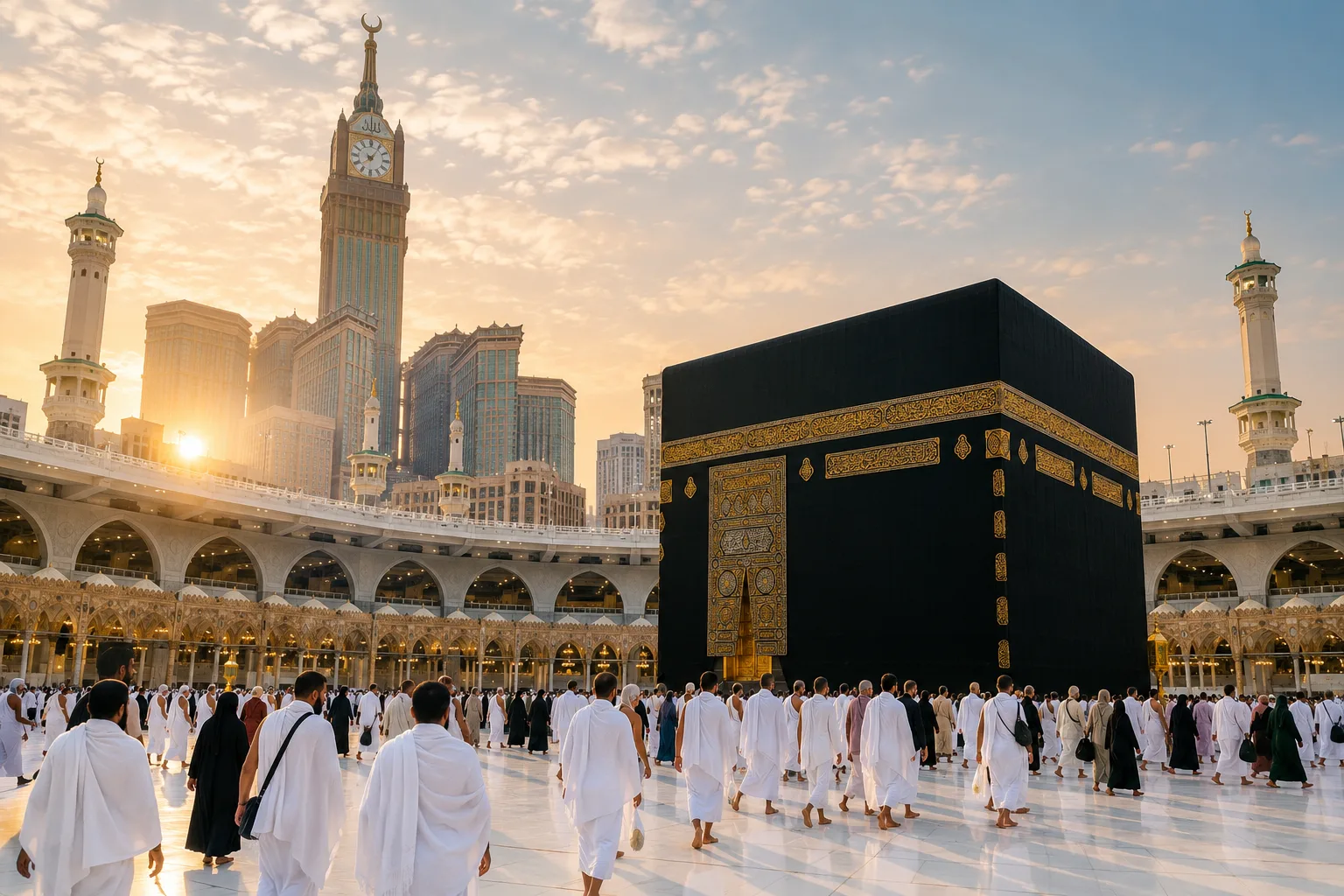
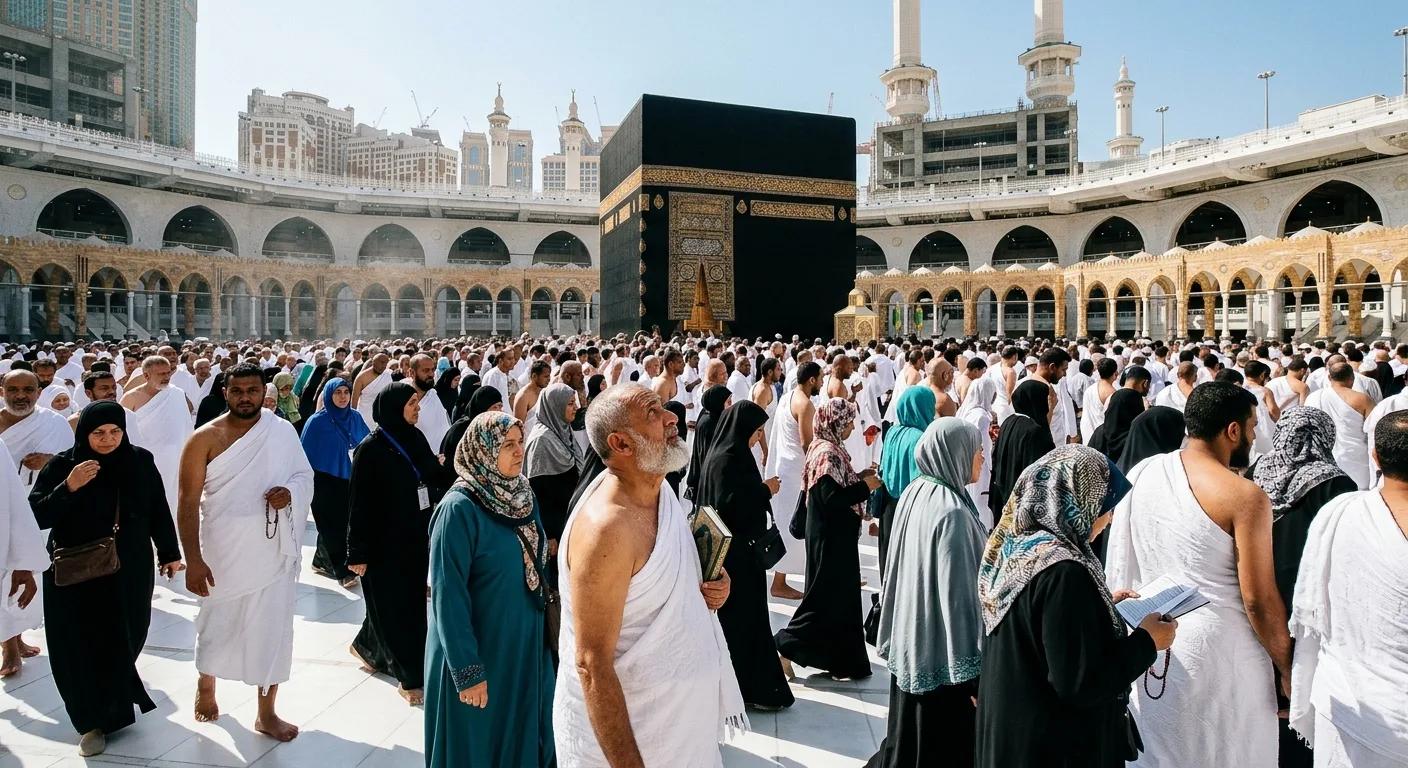
Men generally wear two pieces of unstitched cloth as their Ihram garments. Women wear normal modest clothing that meets Islamic requirements; there is no special Ihram uniform for women in the same way there is for men.
After making the intention, the pilgrim recites the Talbiyah.
The Talbiyah is a declaration of responding to Allah's call and is traditionally recited during the journey toward the Sacred Mosque.
While in Ihram, certain actions that are normally permissible are prohibited. Pilgrims should therefore learn the relevant Ihram restrictions before beginning Umrah.
2. Arriving at Masjid al-Haram
The pilgrim travels to Masjid al-Haram in Makkah and prepares to perform Tawaf.
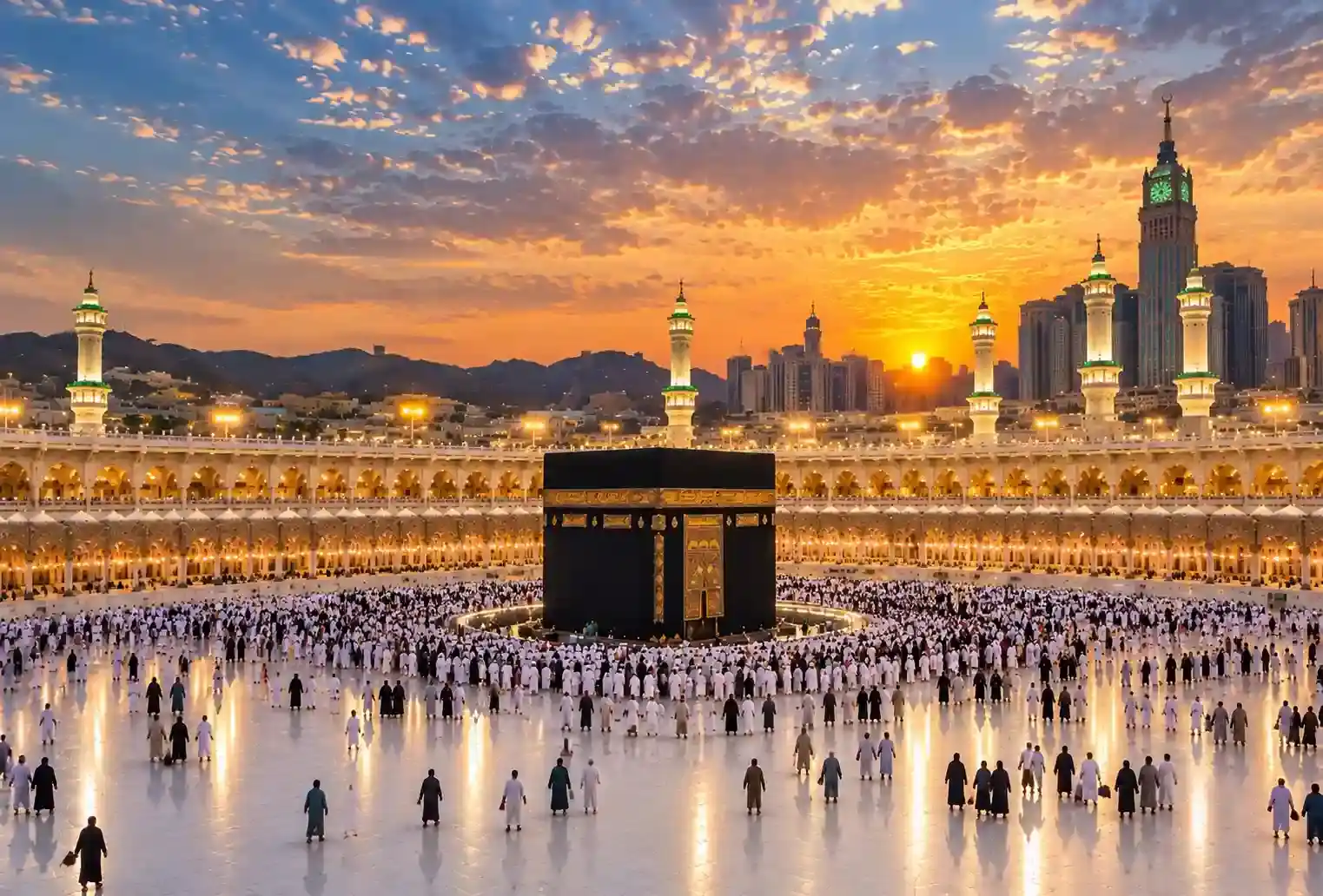
The Sacred Mosque surrounds the Ka'bah, which Muslims face during their daily prayers.
The Ka'bah has a central place in Islamic worship and is associated with Prophet Ibrahim and his son Ismail, peace be upon them.
3. Performing Tawaf
Tawaf means circumambulating the Ka'bah.
The pilgrim walks around the Ka'bah seven times, keeping the Ka'bah to their left.
Each complete circuit is counted as one round, making seven rounds in total.
During Tawaf, pilgrims may make dua, remember Allah, recite the Qur'an, and engage in other forms of worship.
There is not one mandatory dua that must be recited during every part of Tawaf. A pilgrim can make sincere supplications according to their needs while following the established guidance for the ritual.
Tawaf is a powerful reminder of the unity of Muslims. People from different nations and backgrounds gather around the same House of Allah, worshipping the same Creator.
4. Praying After Tawaf
After completing Tawaf, the pilgrim performs prayer according to the applicable Islamic guidance and then continues with the next part of Umrah.
Pilgrims should avoid causing congestion and should follow the instructions of mosque authorities, particularly when the area is crowded.
The priority throughout the pilgrimage should be worship, patience, safety, and respect for other pilgrims.
5. Performing Sa'i
Sa'i is the walking between the hills of Safa and Marwah.
The ritual commemorates the search for water by Hajar, the wife of Prophet Ibrahim, peace be upon them.
According to Islamic tradition, Hajar moved between Safa and Marwah while searching for help and water for her son Ismail. Allah then provided the miraculous source of Zamzam.
Today, pilgrims perform Sa'i in the designated area within Masjid al-Haram.
Sa'i consists of seven trips between Safa and Marwah, beginning at Safa and finishing at Marwah.
The journey is a reminder of trust in Allah, perseverance, and sincere effort.
6. Shaving or Cutting the Hair
After completing Sa'i, the pilgrim completes Umrah by shaving or cutting the hair according to the applicable rules.
For men, shaving the head completely is known as Halq, while shortening the hair is known as Qasr.
Women generally cut a small portion of their hair according to Islamic guidance.
Once the required hair-cutting stage has been completed, the restrictions of Ihram end and the Umrah is complete.
What Should You Take for Umrah?
Preparing properly can make the journey considerably easier.
Useful items may include:
Passport and required travel documents
Appropriate clothing
Ihram garments for men
Comfortable footwear
Medication and basic personal-care items
Phone and charger
Portable power bank
Small bag for essential items
Water bottle where permitted
Prayer materials
Copies of important documents
Necessary financial cards or payment methods
Pilgrims should avoid overpacking. Makkah and Madinah have extensive facilities, and carrying unnecessary luggage can make travelling between accommodation and the mosques more difficult.
What Should You Do Before Umrah?
Spiritual preparation is just as important as packing.
Before travelling, a Muslim may benefit from learning the basic rules of Umrah, studying the relevant duas and acts of worship, settling debts where possible, seeking forgiveness from people they may have wronged, and making sincere repentance to Allah.
It is also useful to learn the practical route of the pilgrimage before arriving.
Understanding when to enter Ihram, where the Miqat is, how Tawaf works, and how Sa'i is performed can reduce confusion during the journey.
Pilgrims should also prepare physically because Umrah can involve considerable walking, especially during busy periods.
Common Mistakes During Umrah
New pilgrims sometimes become overly concerned about performing every action perfectly while forgetting the broader purpose of the pilgrimage.
Some common mistakes include failing to learn the rules of Ihram beforehand, creating unnecessary congestion around the Ka'bah, pushing or harming other pilgrims, becoming impatient in crowded areas, and treating the pilgrimage as primarily a sightseeing trip.
A pilgrim should remember that patience and good character are important throughout the journey.
It is also important not to assume that every action commonly performed by other pilgrims is automatically required. Islamic rituals should be learned from reliable sources rather than from observation alone.
Umrah and Hajj: What Is the Difference?
Umrah and Hajj are both pilgrimages associated with Makkah, but they are not identical.
The biggest difference is timing and the set of rituals involved.
Hajj takes place during a specific period in Dhul-Hijjah and includes major rites such as standing at Arafah. Umrah does not include the standing at Arafah and can generally be performed throughout the year.
Hajj also has different categories and detailed requirements, while Umrah has a comparatively shorter sequence of core rituals.
Both are acts of worship and should be approached with sincerity and knowledge.
The Spiritual Meaning of Umrah
Beyond the physical journey, Umrah can be an opportunity for spiritual renewal.
A pilgrim leaves behind familiar surroundings and enters an environment centered on worship. The experience can encourage reflection on life, repentance for past mistakes, gratitude for blessings, and renewed commitment to faith.
The Ka'bah also serves as a powerful reminder of Islamic unity. Muslims across the world pray toward the same direction, and during Umrah they gather physically in the same sacred place.
The experience can therefore strengthen a person's sense of connection to the worldwide Muslim community.
Frequently Asked Questions About Umrah
How long does Umrah take?
The core rituals of Umrah can potentially be completed within several hours, depending on crowds, walking conditions, and the individual pilgrim. The overall trip is usually longer because travellers may spend additional days in Makkah and Madinah.
Can Umrah be performed at any time?
Umrah can generally be performed throughout the year, although there are practical and regulatory considerations that pilgrims must check before travelling.
Is Ihram clothing the same as Ihram?
No. Ihram refers to the sacred state a pilgrim enters. The clothing worn by men is commonly also called Ihram, which can sometimes cause confusion.
How many times do you walk around the Ka'bah?
Tawaf consists of seven complete circuits around the Ka'bah.
How many trips are performed during Sa'i?
Sa'i consists of seven trips between Safa and Marwah, beginning at Safa and ending at Marwah.
Do women wear special Ihram clothing?
Women do not have the same prescribed two-piece Ihram clothing as men. They generally wear appropriate modest clothing while observing the relevant rules of Ihram.
What happens after Sa'i?
After Sa'i, the pilgrim completes the hair-cutting or shaving stage according to the applicable rules. This completes Umrah and the restrictions of Ihram end.
Final Thoughts
Umrah is much more than a physical journey to Makkah. It is an act of worship that combines travel, prayer, sacrifice, remembrance, patience, and devotion.
For Muslims who have the opportunity to perform it, careful preparation can make the experience more meaningful. Learning the rituals beforehand, understanding the requirements of Ihram, planning practical details, and maintaining patience can help a pilgrim focus on worship.
Most importantly, Umrah should be approached with sincerity and humility. The journey is an opportunity to turn toward Allah, seek forgiveness, make dua, and strengthen one's faith.
Before travelling, pilgrims should verify current travel, visa, permit, health, and access requirements through official Saudi sources and seek qualified religious guidance for questions concerning specific Islamic rulings.